Complete waterjet maintenance guide for technicians. Daily, weekly, monthly checks, component care, and preventive maintenance schedules for 60K psi systems.
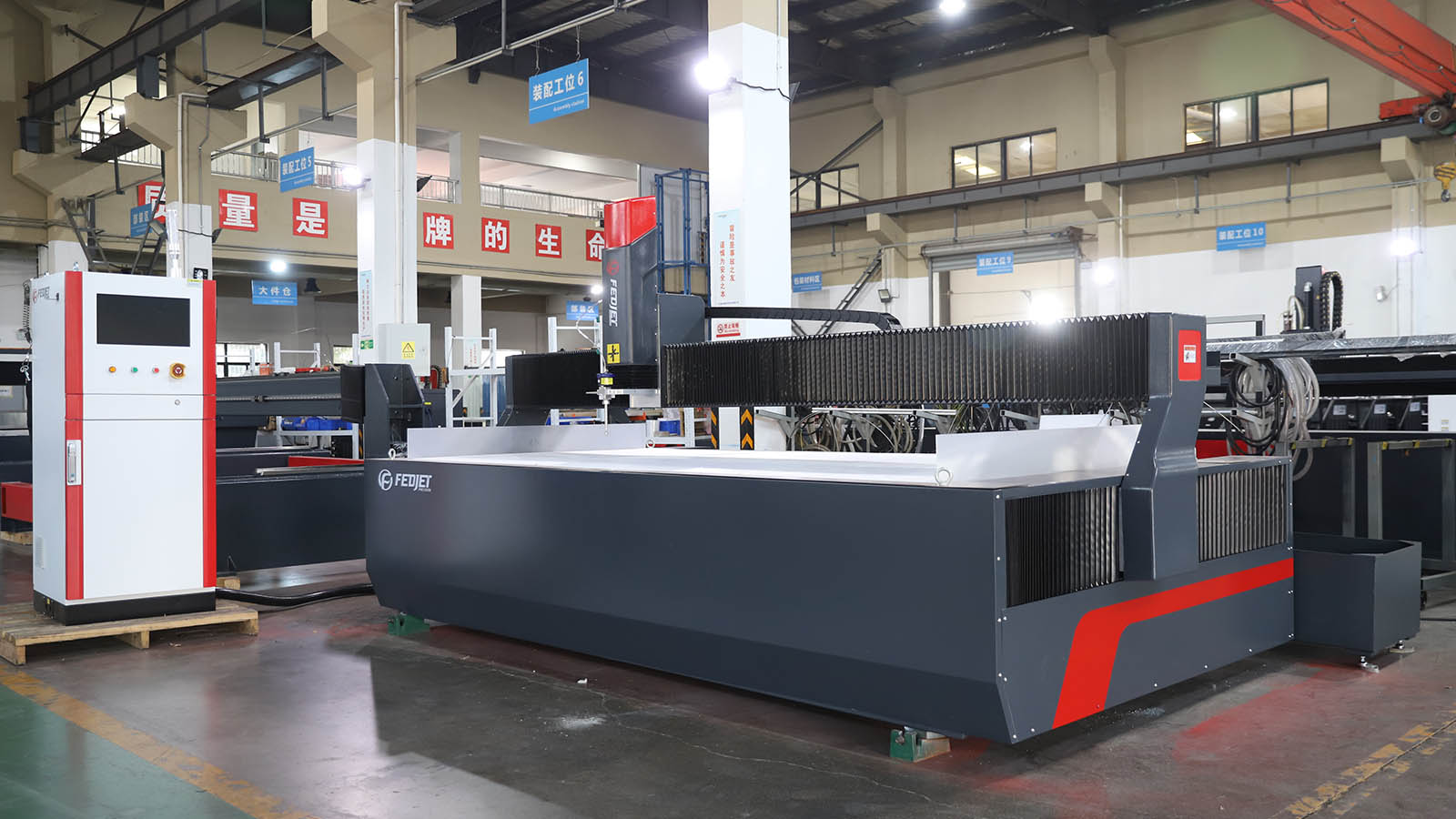
After 15 years maintaining waterjet equipment across aerospace, stone fabrication, and manufacturing shops, I've learned that consistent maintenance separates profitable operations from costly nightmares. Waterjet systems demand attention—skip the basics and you'll replace pumps quarterly instead of running for a decade. This guide gives you the exact maintenance practices I implement on 60K psi intensifier systems, with real thresholds and intervals that keep machines cutting accurately.
I run through these checks every morning before the first cut. Five minutes now prevents hours of downtime later.
Abrasive Flow and Pressure Verification
I feed garnet through the system and watch the cutting stream. A healthy stream shows consistent particle flow with no sputtering. If I see intermittent flow or air pockets, moisture in the hopper or blocked feed lines are the culprits. I check the hopper lid seal first—these fail more often than technicians expect.
Water Pressure Monitoring
For 60K psi intensifier systems, I maintain operating pressure between 55,000 and 60,000 psi. I log the pressure during idle cycling and compare it to cutting pressure. A drop of more than 2,000 psi under load indicates intensifier wear or seal degradation. Running below 55,000 psi means I'm sacrificing cut quality and increasing cycle time unnecessarily.
Nozzle Wear Inspection
I use a 10x magnifying glass to inspect the mixing tube outlet after every 40 hours of operation. Fresh tubes show a uniform cylindrical opening. Worn tubes develop elliptical patterns, chips, or visible deformation. When the outlet diameter exceeds 1.05 times the original specification, I replace the tube immediately. Continuing with a worn mixing tube fractures the orifice prematurely and damages the high-pressure components downstream.
Cutting Table Debris Removal
I pressure-wash the table slats and debris collection tray daily. Sludge buildup under the material support grid causes uneven cutting height, which ruins tolerances on precision work. I also clear the drains—clogged drains create standing water that corrodes the table rails and attracts abrasive debris back into the cutting zone.
High-Pressure Seal Inspection
I visually examine all accessible seals while the system runs at low pressure during startup. I touch the fittings with bare hands—if I feel a hot spot, that fitting is failing. Intensifier seals and line connections near the cutting head see the highest stress. Any weeping or moisture at fittings requires immediate attention before resuming cutting pressure.
Water Filter Replacement
I replace the pre-pump water filter weekly on systems running 80+ hours per week. My target is turbidity below 1 NTU and particle size below 1 micron. When I test the filtrate and see higher readings, I replace the filter immediately regardless of the schedule. Dirty water destroys intensifier seals faster than any other single factor.
High-Pressure Line Inspection
I inspect every high-pressure line visually and by touch. I'm looking for any bulge, deformation, or localized heating. A line that feels hot at a specific point is failing—likely from internal erosion. I mark problem areas with tape and schedule replacement before the line fails catastrophically. Never ignore a hot spot on a 60K psi line.
Abrasive System Blow-Out
I disconnect the feed lines and perform an air purge through the entire abrasive system weekly. This removes moisture that accumulates in the lines overnight, especially in humid shops. Moisture in garnet causes two problems: it clumps and clogs the nozzle, and it accelerates corrosion in the mixing tube and orifice.
Moving Part Lubrication
I grease linear guides on all axes according to the manufacturer's specification—typically every 40-50 operating hours or weekly for production machines. I use only approved lubricants. Inconsistent lubrication causes stick-slip motion that ruins cut accuracy and wears guide rails unevenly. Ball screws get the same treatment.
Gem Orifice Inspection
I check orifices with a go/no-go gauge every 40-50 operating hours. When an orifice reaches 1.05x its original diameter, it goes in the scrap bin. I also inspect for chips, cracks, or contamination. Orifice wear is insidious—it degrades cut quality gradually, and operators often adjust to the declining performance instead of addressing the root cause.
Seal and Packing Replacement
On 60K psi intensifier pumps, seals typically last 200-400 operating hours depending on water quality and duty cycle. I replace seals at the 200-hour mark during scheduled maintenance, not when they fail. A proactive seal change costs $400-600 in parts. An emergency seal change after failure causes $3,000-8,000 in collateral damage to cylinders, valves, and line fittings.
Intensifier Cylinder Inspection
I pull the intensifier pistons monthly and inspect the cylinder walls for scoring, pitting, or wear patterns. Light scoring doesn't always require immediate replacement—many cylinders function for thousands of hours with minor surface wear. But I measure and log the bore diameter. When wear exceeds manufacturer tolerances, I rebuild or replace the cylinder before scoring progresses to seizure.
Hydraulic System Service
I replace hydraulic oil filters monthly and test oil cleanliness to NAS 1638 class 8 or better. Dirty hydraulic oil kills pumps and servovalves. I also check oil level, color, and smell. Dark oil or a burnt smell indicates overheating—find the cause before the hydraulic pump fails.
Water Tank Cleaning
I drain and clean the water tank monthly. Sediment buildup creates a slurry that accelerates wear on the intensifier components. I flush the tank with clean water and inspect the baffles and strainers for debris. The tank should be refilled with treated water, not straight from the supply.
Major Pump Service
Every 2,000-2,500 operating hours, I perform a major pump overhaul. This includes replacing all seals, inspection of all cylinders, replacement of high-pressure valves, and complete hydraulic system flush. I budget $8,000-15,000 for parts and labor on a typical intensifier pump.
High-Pressure Line Replacement
Standard practice is replacing all high-pressure hoses every 24 months regardless of visual condition. The rubber compounds in these hoses degrade from pressure cycling, even when they look fine externally. I've seen hoses fail at 18 months. I don't wait for the catastrophic failure that destroys the fitting and contaminates the system.
Cutting Accuracy Calibration
I verify cutting head perpendicularity and motion system accuracy quarterly. I cut a precision test pattern and measure against known dimensions. If the machine drifts beyond tolerance, I recalibrate the scale offsets and verify encoder integrity.
The intensifier is the heart of the system. I monitor pressure fluctuation during cutting—stable pressure within ±500 psi of target indicates healthy operation. If I see cyclic pressure variation exceeding 2,000 psi, the intensifier valves or seals need attention. Hydraulic oil temperature should stabilize between 110-130°F during normal operation. Persistent overheating points to hydraulic system problems.
Orifice torque matters more than most technicians realize. I torque orifices to 2-3 Nm using a calibrated torque wrench. Overtightening cracks ceramic orifices; undertightening allows high-pressure leakage that damages the mounting face. After torquing, I verify seating with a pressure test before loading abrasive.
I inspect mixing tubes every 40 hours. When the outlet shows erosion beyond the original diameter times 1.05, I replace it. Worn mixing tubes cause poor mixing, wider kerf, and accelerated orifice wear.
Garnet moisture is the enemy. I store hopper contents in a dry environment and check moisture traps daily. The air supply to the abrasive system should be dry—moisture in the feed air accelerates wear throughout the cutting head.
Garnet specifications matter. I use 80-mesh garnet for most cutting and 120-mesh for detailed work. Contaminated or improperly graded garnet clogs systems and degrades cut quality.
Linear guides and ball screws wear faster without proper lubrication. I inspect for contamination in the lubricant channels—grit in the grease supply grinds down guide surfaces. I also check belt tension on gantry drives monthly. Loose belts cause positioning errors; overtightened belts stress motor bearings.
I monitor filtrate quality with a turbidity meter and particle counter. When readings exceed specification, I replace filters regardless of the scheduled interval. Chiller maintenance includes checking coolant concentration, cleaning condenser coils, and verifying flow rates.
Nozzle Clogging
The primary cause is moisture in the abrasive or foreign material in the water supply. I prevent this by maintaining dry hopper conditions, using clean water filters, and inspecting garnet for contamination before loading.
Premature Seal Failure
Dirty water, overheating, and incorrect installation cause most seal failures. I maintain water quality, monitor operating temperatures, and follow exact installation procedures during seal replacement.
High-Pressure Leaks
Most leaks occur at fittings due to damaged seats, incorrect torque, or worn O-rings. I inspect all fittings during maintenance and replace seals at fittings when I see any weeping.
Pressure Instability
Air in the hydraulic system causes pressure fluctuation. I bleed air from the hydraulic system during startup and check for leaks that allow air ingestion. Valve wear also causes instability—inspect and replace hydraulic valves on schedule.
Operating consumables cost approximately $15-25 per hour for a typical 60K psi waterjet running 80 mesh garnet at full pressure. Wear parts (orifices, mixing tubes, seals) account for $8-15 per hour. A realistic annual maintenance budget is 8-12% of equipment cost for preventive maintenance. Reactive maintenance typically costs 25-35% of equipment cost annually.
The math is simple: $10 in preventive maintenance saves $50 in emergency repairs. Every hour of scheduled maintenance prevents 5-10 hours of unplanned downtime.
| Inspection Item |
Frequency |
Key Indicators/Thresholds |
Action Required |
| Water pressure (operating) |
Daily |
55,000-60,000 psi (60K systems) |
Adjust or investigate if outside range |
| Abrasive flow pattern |
Daily |
Consistent stream, no sputtering |
Check hopper seal, blow out lines |
| Mixing tube outlet wear |
Daily |
Visual: uniform opening |
Replace if >1.05x original diameter |
| Table debris/sludge |
Daily |
Clean drainage, no buildup |
Pressure wash table and drains |
| Seal weepage/hot spots |
Daily |
No moisture at fittings |
Tighten or replace fittings immediately |
| Water filter condition |
Weekly |
Turbidity <1 NTU, particles <1 micron |
Replace if readings exceed spec |
| HP line bulges/hot spots |
Weekly |
No deformation, ambient temperature |
Mark and schedule replacement |
| Abrasive system air purge |
Weekly |
Moisture removed from lines |
Blow out all feed lines |
| Linear guide lubrication |
Weekly/50 hrs |
Proper grease coverage |
Lubricate per manufacturer spec |
| Gem orifice go/no-go |
Weekly/50 hrs |
<1.05x original diameter |
Replace immediately if failed |
| Intensifier seals |
Monthly/200 hrs |
No weeping, normal pressure |
Replace proactively |
| Cylinder bore inspection |
Monthly |
No scoring, pitting within tolerance |
Measure and evaluate wear |
| Hydraulic oil quality |
Monthly |
NAS 1638 class 8 or better |
Replace filter, test oil |
| Water tank sediment |
Monthly |
Minimal buildup |
Drain, flush, refill with treated water |
| Pump major service |
Quarterly/2000 hrs |
All wear items at schedule |
Complete overhaul per spec |
| HP hose replacement |
Annually/24 months |
Regardless of condition |
Replace all high-pressure lines |
| Cutting accuracy test |
Quarterly |
Within machine tolerance |
Recalibrate if out of tolerance |
Waterjet maintenance is not complicated—it's just consistent. Follow the inspection intervals, replace wear items before they fail, and maintain water quality above all else. The machines will reward you with years of accurate cutting and reasonable operating costs.
I document every maintenance action in a machine log. Patterns in the data reveal problems before they cause downtime. A seal that lasts 180 hours in summer but 280 hours in winter tells me something about temperature effects. Data beats memory every time.
Your maintenance schedule will vary based on duty cycle, water quality, and operating environment. These intervals work for production environments running 80+ hours weekly on municipal water. Adjust accordingly—but never skip the fundamentals.


